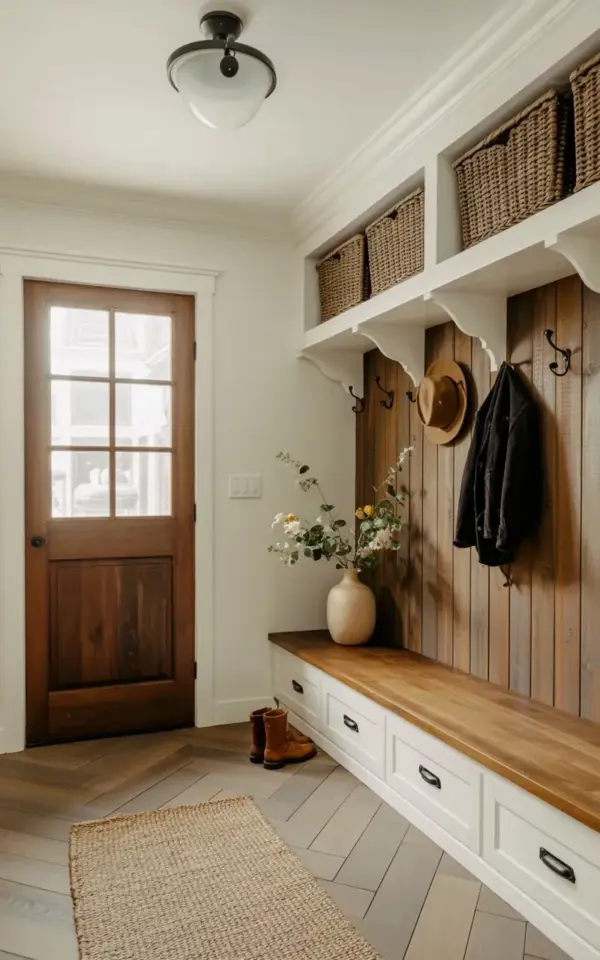
The mudroom in this photo is the exact mix of practical and warm that I personally chase in every entryway I design. It’s a modern farmhouse mudroom, but not the kind that costs a fortune or looks like a showroom nobody is allowed to touch. You can see how it works for a real family. The built-in bench catches the eye first, of course. But then you notice the herringbone floor, the wood plank wall, and you realize every single piece here has a job to do. Honestly, that’s how you build a space that survives a Tuesday morning with kids, dogs, and a million bags.
This is the setup I’d recommend to anyone who wants that cozy farmhouse look without gutting their entire house. Look, you don’t need custom cabinetry or a designer on speed dial. You need a solid plan, some smart priorities, and a willingness to mix a few high-impact pieces with budget-friendly options. Let’s break down exactly what makes this entryway work, what you can copy, and what you can skip.
The Built-In Bench With Drawers Is the Workhorse
That bench stretching across the right wall is doing about eighty percent of the heavy lifting in this room. The natural wood top gives it that farmhouse soul, while the white-painted base with black hardware keeps it grounded in a more modern feel. In the photo, you can see it has three drawers underneath. Ok so, those three drawers are worth their weight in gold. They hold the daily clutter that would otherwise live on your counters or in a sad pile by the door.
I’ve told friends to copy this exact idea more times than I can count. A bench with storage is non-negotiable in a busy entryway. You can find a similar pre-made piece at places like Wayfair or Target, or you can hire a local carpenter to build one in for a surprisingly reasonable price. A narrower bench with two doors instead of three drawers works just as well if space is tight. The point is to get something with enclosed storage. Open shelving looks pretty for about a day, but drawers let you hide the reality of your life.
How to Get a Herringbone Floor Without the Luxury Price Tag
Let’s talk about that herringbone pattern light gray hardwood floor because it’s the backdrop for everything else. Real herringbone hardwood is expensive. It’s labor-intensive to install and requires a skilled installer who knows how to make those angles line up perfectly. But here’s the thing: you don’t need the real deal to get the visual effect.
You have options here, and some of them are genuinely budget-friendly. First, look at luxury vinyl plank (LVP) that comes in a herringbone pattern. It clicks together, it’s waterproof, and it handles muddy boots way better than real wood. Second, you could install a standard rectangular engineered hardwood in a diagonal pattern, which gives you a similar flow without the complex herringbone weave. And third, if your heart is set on actual wood herringbone, buy pre-finished planks and hire a pro for the installation only. Prices vary wildly, but knocking out the finishing work yourself can save you a significant chunk. Whatever you choose, stick to a light or medium gray tone with a matte finish. It hides dust and prints far better than a shiny dark floor.
Wood Plank Walls: The Cozy Factor Booster
The rustic wooden plank accent panel behind the hooks is what gives this mudroom its instant cozy vibe. It breaks up all that white wall and adds a layer of warmth that paint simply can’t achieve. This is one of the easiest DIY projects in the entire room, and it’s cheap. You can use regular plywood cut into strips, or you can buy pre-made wood planks from a home improvement store.
Installation is straightforward. Cut your planks to length, apply construction adhesive to the back, and nail them into the studs. Stagger the seams so it looks organic, not like a grid. I used furring strips in my own laundry room to create a similar shiplap effect, and the total cost was under fifty dollars. For this look, pick planks with a warm brown tone and visible grain, just like the ones in the photo. A matte polyurethane finish will protect them from the inevitable scuffs and bumps.
Black Hooks That Handle the Chaos
Black metal coat hooks are the unsung heroes of this whole setup. They’re mounted on the wood plank wall in the photo, and they do exactly what they’re supposed to do: hold coats, hats, and bags without complaint. There’s no hidden cabinet door to fiddle with, no fancy rack to organize. Just hooks. It sounds too simple, but it works because it’s so immediate. You walk in, you toss your stuff, you’re done.
Here’s a practical tip from someone who’s owned a few different styles: buy the kind with two prongs, not one. Single-prong hooks let jackets slip off all the time. Double-prong hooks keep things in place. You can find a four-pack of heavy-duty black hooks for around fifteen bucks on Amazon. Pick ones with a matte black finish, and they’ll look like they cost five times that amount. Do not overthink this purchase. It’s the easiest win in the whole project.
The Dark Wood Door That Grounds the Whole Room
Don’t skip over the door in the photo. That dark brown wood with black hardware is a masterclass in contrast. Against the white walls and light floor, it adds a deep, grounding anchor to the space. A door like this makes the room feel intentional, like every choice was made on purpose.
If you already have a cheap hollow-core door, you can upgrade it without replacing the entire thing. A can of dark walnut stain or a good quality gel stain can transform a basic door. Or, buy a pre-hung door with glass panes like the one pictured. The glass panes let in natural light, which is a huge bonus in a mudroom that might not have a window. The black hardware, a simple lever handle and hinges, ties directly into the black hooks and the black drawer pulls. It’s a small detail that completes the whole farmhouse picture. When shopping for your own door, look for one with clear or lightly frosted glass so you get the light without giving up all your privacy.
Entryway Layout and Flow: Think Like a Drop Zone
Ok so, look at the layout in this photo. The door on the left, bench on the right, hooks above the bench, and floor space in between. That’s a functional drop zone, not just a pretty corner. The key is to keep a clear path from the door to the rest of your home. You want at least thirty inches of walking space between the bench and the opposite wall. Otherwise, you’ll be squeezing past wet coats every single day, and you’ll start to hate the room.
Think about your daily rhythm. What do you carry in your hands? Where do you put your keys? Does your dog need a towel station? The best mudrooms have a specific home for every single item you carry daily. If you don’t know where it goes yet, throw a couple of baskets on the bench or on the floor underneath. Baskets are a perfect temporary fix. I have one for dog leashes and one for random mail, and it keeps everything from becoming a massive pile.
Finishing Touches and the Bottom Line
The accessories in a mudroom should be minimal, practical, and a little bit charming. A woven rug, a simple wooden bench, maybe a small plant on a shelf to add a little life. That’s all you need. Don’t clutter it up with too many decorative objects, because everything here has to survive real life. And real life involves wet umbrellas and dirty soccer cleats.
So here’s the bottom line. You don’t need a massive renovation budget to achieve this exact modern farmhouse vibe. You need a bench with storage, some good hooks, a warm wood accent, and a durable floor that makes you feel something. If you spend your money on the flooring and the bench, you can save on the hooks and the paint. This is a room that works hard. It’s beautiful without being precious, and that’s the whole point.
Now, go measure that empty corner by your door. Pin this to your mudroom makeover board, and start thinking about your plan of attack. It’s a weekend project for most people, and the payoff is worth every second.
Leave a Comment