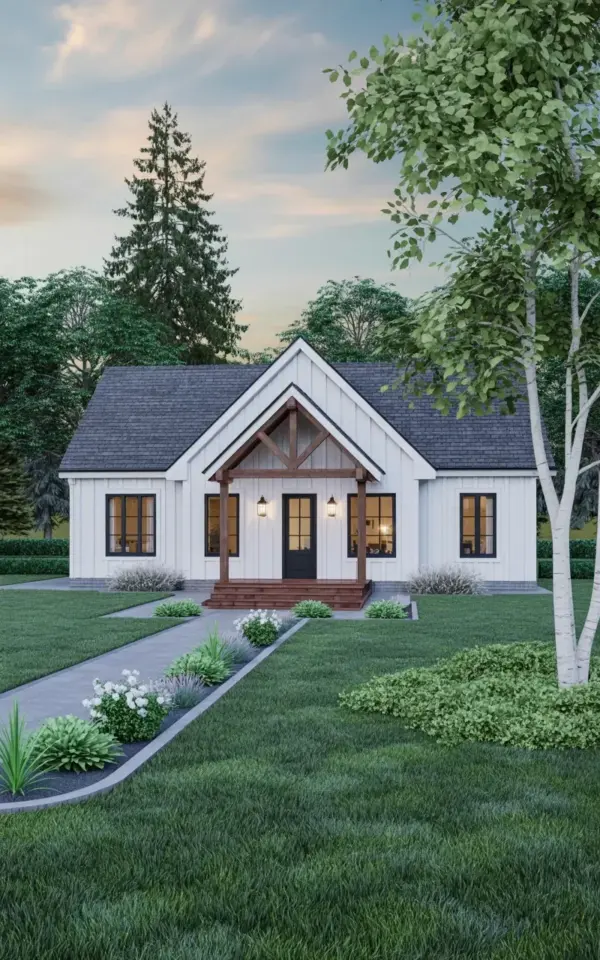
It’s the kind of house that makes you slow down while driving through a neighborhood, the classic ModernFarmhouseExterior that gets a gold star in my book. White siding, a black door, and a porch that wraps around the front like an invitation to pause. That photo with the dark gray shingles and the white flower beds? I’ve stared at it more than I care to admit. The whole scene is quiet but confident, the sort of place where you’d expect to find a glass of sweet tea sweating on a side table.
That combination of crisp white, warm wood, and serious black trim is not an accident. It’s a formula, one that works on almost any budget if you know what to prioritize. I want to walk you through the exact steps to get this look, from the big structural pieces down to the small styling choices that make people feel at home before they even knock. Grab your notebook, or just mentally reshuffle your to-do list, because this is the practical stuff.
Start With the White House Exterior as Your Canvas
White siding has a bad reputation for showing dirt, and honestly, that’s a fair complaint. But it also does something magical: it makes every shadow, every line, and every material choice around it look intentional. In this particular house, the walls aren’t stark white, they have a warm undertone that plays nicely with the wood beams instead of fighting them.
You do not need to replace your siding to get this effect. A good quality exterior paint in a soft white like Sherwin Williams “Alabaster” or Benjamin Moore “Chantilly Lace” will do the trick. The trick is to avoid pure white, which can look blue or sterile in bright sunlight. Look for a shade with a hint of cream, beige, or greige in it.
One thing I notice in the photo is how the dark gray roof shingles anchor the whole exterior. If you’re building new, that darker roof is a big reason the white walls don’t feel washed out. If you’re stuck with a lighter roof, don’t panic. You can balance it by painting the porch ceiling a darker shade or using heavier wood accents, it’s all about creating contrast where you can.
Why the Black Door Works So Hard for Curb Appeal
Here’s the thing about a black door: it’s not a color choice, it’s a statement of confidence. The black metal front door in this photo is framed by two black windows, which creates a solid, grounded center to the whole house. It says “yes, I know what I’m doing” in a way that a navy blue or even a deep green door just can’t replicate.
Painting your existing door black is the single cheapest transformation on this whole list, and I’m not exaggerating. Go buy a quart of black exterior paint, a decent brush, and some painter’s tape. Take your time with the prep work, and you’ll have a door that looks like a five-thousand-dollar upgrade for about forty bucks.
But if you want the full look from the photo, consider replacing a solid door with a metal one that has a narrow glass panel or a modern geometric design. The black frame around the glass brings in that industrial farmhouse vibe without making the house feel like a barn. I personally love the way the black frames echo the black lantern lights on the porch posts, it’s a small repetition that pulls the whole exterior together.
Build a Porch That Feels Like a Room
The FarmhousePorch in that picture is not a tiny little slab with a welcome mat. It’s a proper outdoor room with enough depth for a couple of chairs and a small table, which is honestly all you need for real life. The exposed wooden beams along the ceiling are the unsung heroes here. They add a sense of structure and weight that a flimsy aluminum awning just cannot provide, and they are worth every penny if you can budget for them.
If your porch doesn’t have beams, look at the composition as a whole. The dark brown railing gives the house a visual boundary and a place to rest your arms. A porch without a railing can feel unfinished. What if you can’t install a full wooden ceiling? Try adding wood trim to the front edge of the roof overhang, it’s a smaller detail that hints at the same style.
The furniture on this porch is simple, nothing fancy. You don’t need a full outdoor sofa. A couple of Adirondack chairs, a tiny side table, and a planter is enough to sell the fantasy. The goal is to make it look like someone actually sits there, not like a showroom display.
Layer in the Wooden Accents and Natural Texture
Take a second look at the wood in this photo, it’s not all the same shade. The exposed beams are a lighter natural tone, while the railing is a deeper brown. That mismatch is on purpose. It creates depth. An all-one-color wood porch can look flat and boring, but mixing a couple of stains gives the eye something to wander over.
I’m a sucker for wood that is actually wood, not that plastic composite stuff that looks like wood from a distance but feels like plastic up close. Yes, real wood requires maintenance, I’ll grant you that. But the payoff is that rich texture that catches the sunlight and makes the porch feel alive.
If you want to fake this look with budget materials, use a faux wood grain plastic on the posts and railing. Nobody will judge you at a drive-by glance. Pair that with real wood furniture or a small wood crate as a plant stand. The mix of real and faux wood is seamless enough if you keep the colors warm.
Soften the Hardscape With White Flowers and Green Lawns
Here’s a secret that the photo reveals: the landscaping is doing at least a third of the work. The curved garden beds cut into the green lawn, and the white flowers pop against the dark mulch and the white siding. A planting bed that goes straight along the foundation reads as a border, but a curved bed reads like a design statement.
If your flower beds are just dirt and weeds, start by defining the edge. Use a sharp shovel to cut a clean curve, then lay down fresh mulch. The white flowering plants in this photo are classic choices. Think white hydrangeas, white azaleas, or even simple annual white begonias, all of them read clearly at dusk and dawn.
And I know I said I’d avoid cliches, but honestly, a well-maintained green lawn is the runway for everything else. If your grass is patchy and yellow, no door color is going to save you. Water it, seed it in the fall, and mow it on a regular schedule. People think curb appeal is all about expensive upgrades, but half the time it’s just consistent lawn care.
Choose Lighting That Flatters the Porch at Night
You’ll notice the black outdoor lantern-style fixtures mounted on the wooden posts. I absolutely love these. They are the finishing touch that makes the house look welcoming after the sun goes down, and they match the overall aesthetic of the black trim. Don’t let your porch lighting be the last thing you think about. Get it right and you’ll extend the beauty of the exterior into the evening hours.
Pick lights with a warm bulb, not that harsh daylight blue. A color temperature around 2700 to 3000 Kelvin is the sweet spot. The warm glow on the white siding is transformative. The lanterns don’t have to be expensive, either. I’ve seen great budget versions at big box stores that look just as good as the expensive cast metal ones from specialty shops.
The placement matters just as much as the fixture. Mount them on the posts that border the stairs or the door, not on the ceiling directly above the seating area. You want the light to wash over the people walking up, not just illuminate the doorway.
Stick to a Cohesive Color Palette, Then Repeat It
Look at the photo again and count the colors. Honestly, there are three: white, black, and natural wood. That’s it. The white flowers, the green lawn, and the dark roof shingles are the supporting players. When you keep the palette that tight, everything looks instantly high-end because it looks like a plan was in place.
I’m not saying you can’t add a pop of color, that’s your house. But the reason this specific ModernFarmhouseExterior works is because the restraint is consistent. The black door is repeated in the windows, the lanterns, and the house numbers. The white is repeated in the siding and the planters. The wood is repeated in the beams and the railing.
Before you plan any exterior work, go sit across the street and look at your house as if you were a stranger. What color keeps showing up by accident? What needs to be repeated? Honestly, a unified palette fixes more problems than any single fancy purchase can. It’s the glue holding all these other details together.
I hope this guide gives you a clear starting point for your own white farmhouse, whether you’re doing a full renovation or just a weekend painting project. The best part is that this look doesn’t rely on one expensive item, it relies on thoughtful choices and good execution. Start with one corner of the porch, paint a door, plant some white flowers, see how it feels. You might just find yourself sitting out there all day, and honestly, that’s the whole point.
Leave a Comment