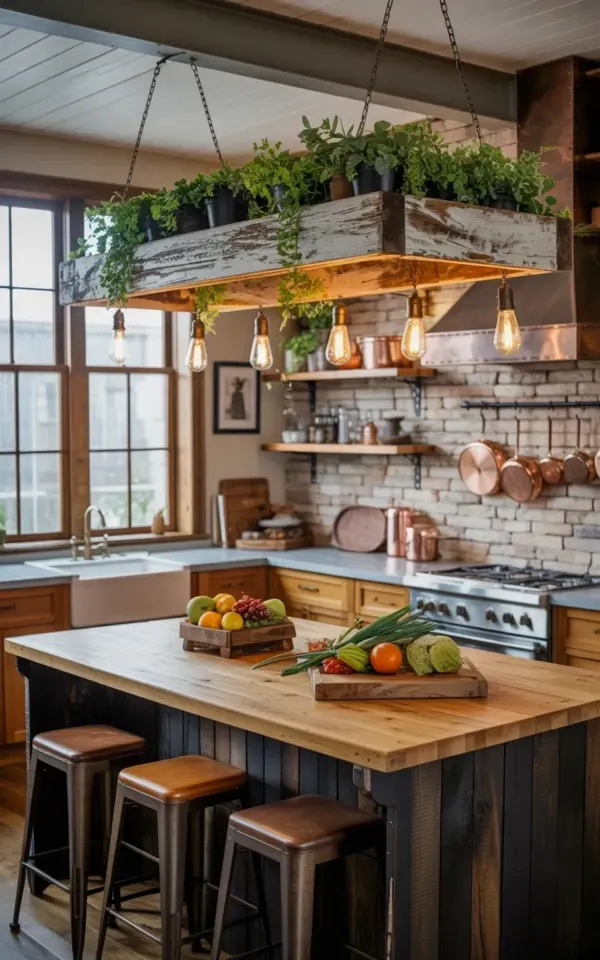
Walk into a farmhouse kitchen that actually gets used, and the first thing you notice is usually not the cabinets. It’s what hangs overhead. Mine has a distressed black base and a natural wood top, and for months it looked finished but a little empty. A farmhouse kitchen island hanging planter changed that, and it cost me less than most countertop stools.
The internet makes this project look too easy. You see a weathered beam suspended over an island, filled with cascading greenery and Edison bulbs, and you think it’s an afternoon job. It can be. Just not the way the videos show.
Here’s the thing, I’ve made almost every mistake you can make with overhead planters. So let’s skip the pretty tutorial fluff and talk about what actually goes wrong.
The First Mistake: Using Wood That Looks Rustic but Acts Rotten
Cedar and pine look right in a rustic kitchen. That doesn’t mean they’ll hold a wet container full of soil without warping. I learned this with a pallet beam that looked perfect on the outside and started to twist within a month. The fix is to seal the wood or choose a dense hardwood, then dry fit the whole thing before you commit.
The beams in the photo that inspired this post are weathered, not rotten. Big difference. Old, dry, sealed wood carries that farmhouse mood without turning into a science experiment. Run your hand over the board before you buy it. If it crumbles, don’t hang it above your head.
Ignoring the Weight Until Gravity Reminds You
Plants are heavy. Soil is heavy. Water is heavy. A wooden trough with six trailing plants and a metal frame can easily hit fifty pounds. Those thin drywall anchors from the hardware store are not going to cut it.
My first attempt crashed into a bowl of peaches. It didn’t wreck the island, and honestly the peaches survived, but the noise and the dirt were enough of a lesson.
Before you hang anything, ask yourself a few blunt questions:
- How much does this planter weigh when every plant is fully watered?
- What is my ceiling made of, and can I find the joists?
- Will the chain length keep it clear of heads and still low enough for me to reach?
- Do I trust a hook that costs less than my coffee order?
Anchor into a joist or use a rated ceiling hook. This is not the place to get creative.
Hanging It at a Height That Works for Nobody
Too high and you can’t water a single fern without a ladder. Too low and every guest clocks their forehead on it. Somewhere around thirty to thirty-six inches above the counter reads right for most islands.
But the distance also depends on your lights. The Edison bulbs in the photo do double duty, they create that cozy glow and they force you to plan the chain layout carefully. You don’t want a dangling bulb tangled up in a strand of ivy. Measure the drop, add the planter depth, and then step back to imagine it at eye level from across the room.
Choosing Plants That Sit There Like a Bad Haircut
Not every plant is a trailer. Pothos, string of pearls, English ivy, and certain ferns will spill over the edge nicely. A compact succulent or a peace lily will just sit in the trough and look confused.
The planters in that farmhouse kitchen work because the greenery spills in different directions. Some strands hang almost to the island surface. Others curl around the wood beam itself. That’s the part to copy.
My favorite is a plain golden pothos. It grows like a weed, tolerates my forgetfulness, and drops vines that look like they’ve been there for decades. For a hanging planter, you want plants that trail with personality, not ones that just sit there.
Forgetting That Kitchens Are Not Living Rooms
Kitchens have heat from the stove, steam from the kettle, and often less natural light than people expect. If you can hang your planter near a window, great. If not, pick low light plants or accept that you’ll be swapping them out regularly.
The beige and gray stone brick wall in the background of that photo does something sneaky. It bounces soft light back onto the plants. A wall of dark cabinets would be a totally different situation.
Watering is another reality check. A hanging planter over a marble countertop can drip, stain, and leave little chalky marks on the surface. Use a saucer or a liner, or you’ll be cleaning limestone stains off your light gray marble by week two.
Matching the Hardware Without Turning It Into a Theme Park
Black chain, brushed steel, and old iron hooks can all work in a farmhouse kitchen. The mistake is mixing them randomly or grabbing shiny new parts that look like they escaped from a modern office building.
The copper pots hanging on black metal hooks in the photo are a good clue. They share a warm, aged finish with the chains and the Edison bulbs. Everything belongs to the same generation. If you want that rustic decor feel, pick one metal finish and stick with it.
Spray paint fixes almost any mismatch, by the way. I painted a set of bright silver chains with a matte black spray can and they instantly looked like they’d been hanging in an old barn for
Leave a Comment