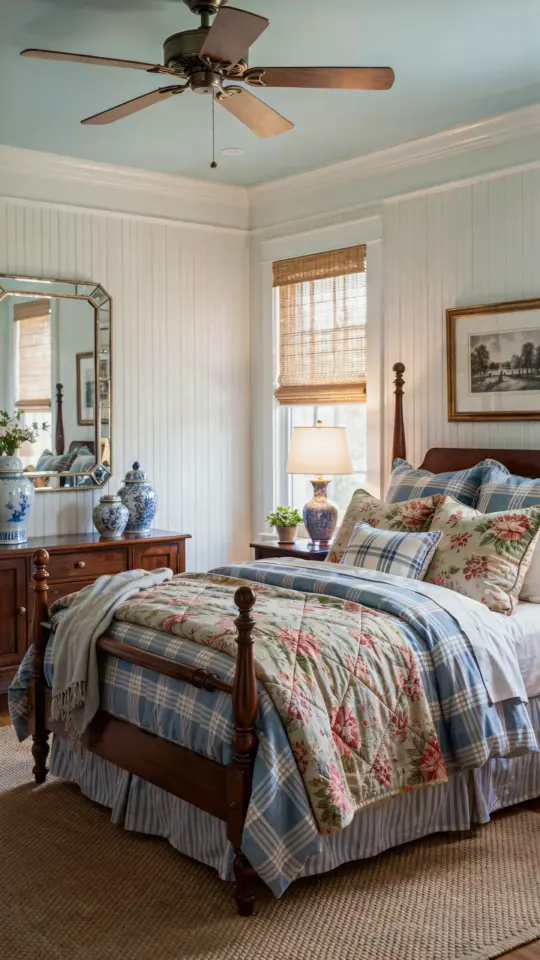
Seven p.m. on a Tuesday, and my bedroom looked like a moving box had exploded. Beige linens, a slab of plywood I was sanding, and three candles I hadn’t lit yet. It was a far cry from the calm, layered sanctuary I kept pinning. But here’s the thing about a farmhouse bedroom; it doesn’t require a full renovation or a furniture store spree. It actually starts with texture, warmth, and a little bit of patience. You can absolutely build a dreamy farmhouse bedroom on a budget that whispers “country comfort” without screaming “expensive catalog.”
I have a specific, mildly obsessive love for the way soft neutral bedding looks against rough wood. It’s that contrast that makes a space feel intentional. And honestly, the secret to that cozy bedroom feel isn’t the price tag; it’s the layering. Let’s talk about how to get that exact look, the calm and peaceful vibe that makes you exhale the second you walk in, without wrecking your savings account.
## Start With a Paint Color That Does the Heavy Lifting
Before you buy a single throw pillow, look at your walls. A warm, greige or a soft, milky white is the backbone of any country farm style room. Skip the stark, sterile white; it feels cold. Instead, try a shade with a hint of warmth, like a light oatmeal or a very soft mushroom tone. This instantly makes the room feel like a hug, and it costs less than $40 for a gallon of quality paint.
If you’re renting, or painting feels like too much work, use fabric to achieve the same effect. A large, inexpensive canvas drop cloth can be washed, softened, and draped over a curtain rod for instant, breezy linen curtains. It sounds weird, but they filter light in the most beautiful, diffused way. And they cost about $15 for a huge piece of fabric that will cover two windows.
## Layer Lighting: Say No to the Overhead Fixture
The harsh ceiling light is the enemy of a serene sanctuary. You want pools of warm light scattered around the room. Thrift stores are goldmines for old brass or wooden lamps; just spray paint the bases in a matte black or a rustic iron color. Put one on the nightstand and one on a dresser to create a soft glow. Then, add candles. Real ones. A few plain cream pillar candles in glass holders on a wooden tray can transform the room for under $20.
Here’s where you can break the “rules” and mix metals and textures. A wire basket on the wall holding a string of warm fairy lights adds a whimsical touch that feels very farmhouse. Or, use a vintage-style LED Edison bulb on a simple cord. It hangs down and casts a lovely amber light. Avoid the cool white LEDs, they are the quickest way to ruin a cozy bedroom vibe.
## Use Natural Fibers for That Textured, Neutral Bedding Look
Look, I love a crisp white linen duvet, but the price tag can be brutal. The trick is to shop for fabric, not labels. Hemp, cotton, and even bamboo blends look incredibly high-end when they are rumpled. In fact, the more wrinkled, the better. You are not making a hospital bed; you are creating a soft, inviting nest. Start with a neutral base, like a chunky knit throw at the foot of the bed.
A great hack is to buy a duvet cover one size larger than your comforter. Use a king-size duvet on a queen bed. This gives you that oversized, puffy, cloud-like look immediately. Then, layer your textiles in varying off-whites:
– A smooth, washed cotton sheet set.
– A textured, ribbed or waffle-weave blanket.
– A chunky, handcrafted-looking knit throw.
– A few pillows in linen, but never matching prints. Keep them all solid, neutral, and tactile.
The key is that nothing should match perfectly. a slightly grey-toned white next to a creamy white next to a tan throw. That’t the magic.
## Repurpose and Scavenge for Rustic Wood Accents
You do not need to buy “rustic” decor from a fancy store. Look for old, chipped picture frames, a wooden stool, or even an old crate. They add that rustic wood accent without the new-home smell. I have a piece of reclaimed barn wood that my uncle gave me; it’s just leaning against the wall, but it adds more character than any store-bought sign ever could. Scour garage sales and flea markets for old wooden ladders; they are perfect for draping quilts or holding a tray of candles.
Don’t be afraid to get a little dirty. That wood bench at the end of the bed? It might be a repurposed fireplace mantel that you sanded and waxed yourself. The old window frame that serves as a headboard? It might be something you found on the side of the road. There’s a distinct sense of pride in creating a dreamy bedroom filled with items that have a story, not just a barcode. Also, you save a ton of money doing it yourself.
## Mix Vintage and New Pieces for a Collected Feel
The biggest mistake people make with farmhouse style is buying everything from the same store. It ends up looking like a staged showroom, not a lived-in home. You want the room to look like it has evolved over time. Pair a brand-new, cheap, solid wood bed frame with a vintage, hand-stitched quilt from a thrift store. Put a modern, simple white ceramic lamp on an old, worn wooden nightstand.
This mix is what makes the style feel “dreamy” rather than “country kitsch.” It’s about the tension between the old and the new. If you have soft, modern bedding, you need a rough, rustic frame. If you have heavy, dark wood furniture, lighten it up with airy, white linens and a delicate floral arrangement. It’s all about balance and not being afraid to make slight mistakes. A room that is too perfect is rarely a room that feels calm.
## Style the Bed Like a Florist and a Sheep Had a Baby
Ok so, the actual styling of the bed is where the magic happens. The “layered textures” you see in those Pinterest pictures are very deliberate. There is a method to the madness. It’s about creating depth without clutter. Here is the order of operations that I swear by:
1. Put the fitted sheet on. That’s the boring part.
2. Add the flat sheet, but leave it loose and not tucked too tight. let it hang unevenly.
3. Place the duvet on top, but fold it down about a foot from the top of the bed to show the sheet.
4. Lay a lightweight blanket (knit, crochet, or quilt) across the foot of the bed horizontally. Off-center is better.
5. Add the pillows: sleeping pillows in plain shams facing the headboard, and then two larger, square euro pillows in front of those, but propped up lazily.
The trick is to then fluff everything and mess it up slightly. You aren’t making a bed; you are assembling a sculpture of comfort. Grab the duvet and give it a little shake. Pull the top blanket out a bit so it looks effortless. This styled chaos is what makes it feel inviting. I’m not gonna lie, I will sometimes re-arrange the throw blanket three or four times before I get it to look this perfectly relaxed.
## Add Personal, Grounding Details
Finish the room with a few small items that make it uniquely yours. A stack of old books with worn spines on the nightstand. A small, chipped pottery bowl holding your rings. A single branch with dried flowers in a plain glass vase. These are the details that make the room feel like a retreat. It shouldn’t look like it was decorated for a magazine, it should look like a room where you actually sleep, read, and daydream.
Forget the generic “Live, Laugh, Love” signs. Look for items that have a functional purpose or a memory attached. That little ceramic dish you made at a paint-your-own-pottery place three years ago? Put it out. The good binoculars your dad gave you? Leave them on the windowsill. These elements ground the space in reality and make it feel calming because they are familiar.
The true goal here is a space that feels open, airy, and uncluttered. A few sensory objects placed intentionally are much more effective than a hundred little knick-knacks gathering dust. This is how you make a calm, cozy bedroom that you actually want to spend time in.
When you finally crawl into that bed, surrounded by soft, layered fabrics and the flicker of candlelight, you’ll realize the effort was worth it. It’s not just about aesthetics; it’s about creating an environment that signals to your brain that it is time to slow down. Try it this weekend. Start with just one corner, maybe just the bed itself, and see how the rest of the room follows.
Leave a Comment