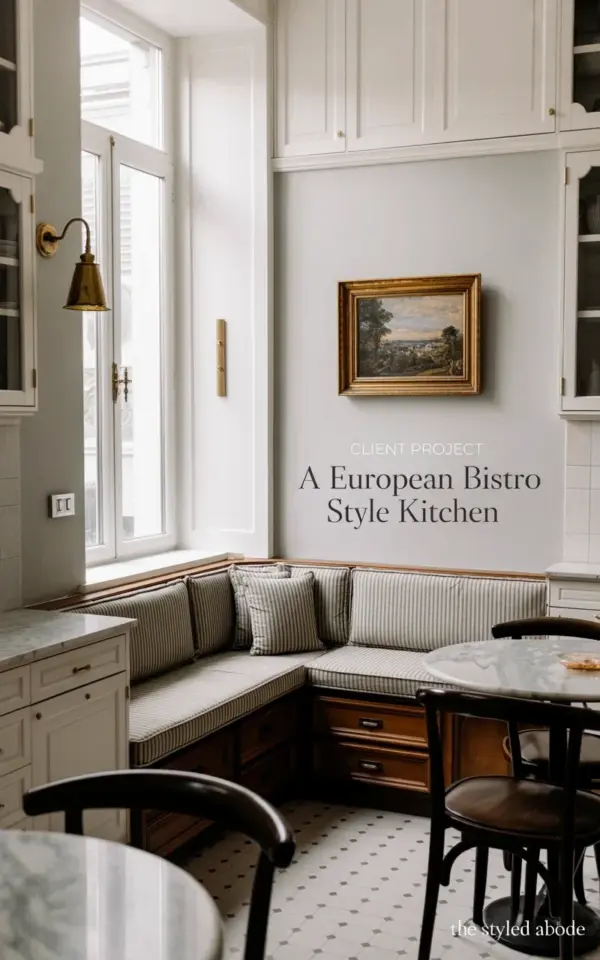
A bell‑shaped brass sconce throws soft light onto a gray‑and‑white striped cushion, and for a second you forget you’re in a kitchen. That little corner, with its built‑in banquette seating, is the kind of spot that makes a farmhouse kitchen feel like a destination. I keep coming back to this photo because it nails something simple: you don’t need a giant renovation to get a cozy, collected look. You just need a bench, some drawers, and a window that lets the morning pour in.
This beginner‑friendly guide is for anyone who has stared at an empty corner and wondered what to do with it. I’ll walk you through the basics of built‑in banquette seating, the materials that make sense, and the small styling choices that turn a plain nook into your favorite seat in the house. No prior experience needed, just a willingness to measure twice and maybe curse once.
Why a Built‑In Banquette Feels So Right in a Farmhouse Kitchen
A banquette is not just a bench. It’s a way to use space that otherwise goes to waste, and it gives you a place to linger over coffee instead of rushing out the door. The built‑in part matters because it disappears into the wall, almost like furniture that grew there. With drawers tucked underneath, you get storage without adding a bulky sideboard or cabinet.
The farmhouse kitchen style loves a little asymmetry, and a banquette delivers that by nature. Paired with a simple wood table and a couple of loose chairs, the built‑in bench softens the room. It says someone lives here, not just someone cooks here. And honestly, the striped cushion in this photo does a lot of the work. It adds pattern without shouting, and the neutral gray keeps the eye moving toward the window.
Choosing Cushions and Fabrics That Survive Real Life
Fabric is the first thing people notice, but it’s also the first thing that gets stained. For a kitchen banquette, look for performance upholstery or a durable cotton blend with a removable cover. The striped cushion in this example is smart because the pattern hides crumbs and small spills. That’s not an accident, it’s practical styling.
You also want to think about thickness. A cushion that’s too thin feels like sitting on a park bench. Too thick and you’ll slide forward. Aim for a seat cushion around 4 to 6 inches thick, and a back cushion that supports your lower back without swallowing you. If you’re testing in a store, don’t be shy. Sit down. Lean back. Wiggle a little.
Here are a few fabric ideas that work well in a farmhouse kitchen nook:
– Gray and white stripes (classic, forgiving, pairs with almost any wall color)
– A warm linen blend in cream or oat for a softer, more casual look
– A subtle buffalo check in a muted red or navy
– An outdoor fabric if you want something truly wipeable
Storage Under the Bench: Drawers, Cabinets, and Clever Bins
The drawers underneath this built‑in banquette are the real hero. They turn dead space into a place for table linens, board games, or that drawer full of takeout menus you’ll never throw away. If you’re building from scratch, pull‑out drawers are easier to access than a simple flip‑up lid, especially if the bench sits against a wall.
You don’t need to be a master woodworker to make this happen. Many IKEA cabinets or base cabinets can be repurposed under a custom seat, and a good contractor can frame a base with standard drawers. If you’re renting, consider a freestanding bench with storage baskets underneath. Not built‑in, but close enough, and you can take it with you.
One detail people overlook: ventilation. If you store food in those drawers, add a few small vents or keep things like potatoes and onions in breathable bins. Otherwise, you’ll open a drawer one day and wonder what died in there. Not that I know from experience. Ok, I do.
Lighting and Windows: Keeping Your Kitchen Nook Bright and Airy
The tall window in this photo is doing more than letting in light. It frames the banquette and makes the corner feel like a little room inside the room. If you have a window nearby, lean into it. Keep the trim white to match the walls, and don’t cover it with heavy curtains. A simple Roman shade or bare window works best.
The brass sconce adds warmth after the sun goes down. That bell‑shaped shade is a lovely nod to bistro style, and it’s mounted at eye level so it reads as decorative, not just functional. When you’re choosing lighting, think about the height. A sconce around 60 to 66 inches from the floor will cast a nice pool of light on the table without glaring into your eyes.
If you don’t have a window in that corner, use a mirror or a piece of art with a bright, airy scene. It’s not the same, but it tricks the eye enough to keep the space from feeling like a cave. Add a dimmer switch too. Trust me, you’ll want that soft glow for early mornings and late evenings.
Farmhouse Kitchen Decor: Walls, Cabinets, and That GeomeTRY Tile Floor
Look at the background of this photo and you’ll see the details that make the whole room hang together. Soft white walls, white upper cabinets with brass hardware, and a geometric floor tile that adds just enough visual interest. The banquette sits in front of all that, and nothing fights for attention.
For your own kitchen, keep the backdrop simple. White or off‑white walls make the banquette furniture stand out, and brass hardware warms up the white without being too shiny. The geometric floor tile is a bold move, but you can also use a patterned rug or a vintage runner to get the same effect. Honestly, a good rug is easier to change when you get tired of it.
Don’t decorate every surface. A banquette nook looks best with a few intentional items: a small vase, a stack of plates, or a single framed print. The striped cushion is already a pattern, so let it breathe. Use the wall sconce and the window as your main accessories.
A Beginner‑Friendly Step‑by‑Step Plan for Your Own Banquette
If you’re ready to try this in your own kitchen, here’s a simple process that works even if you’ve never built anything before. First, measure the corner you’ve chosen. Write down the width, depth, and ceiling height, and don’t forget to account for baseboards and outlets. Second, decide on the bench height. Standard dining chairs are around 18 inches at the seat, but for a banquette, 17 to 19 inches is comfortable depending on your table height. Third, build or buy the base with storage. You can use base cabinets, build a simple plywood box, or buy a ready‑made bench frame.
Fourth, add the seat and back support. A plywood base topped with foam and fabric works well, and you can secure cushions with Velcro or ties. Fifth, install the banquette against the wall or in the corner. Use brackets or wood screws to anchor it if you have kids or clumsy guests. Sixth, style it with a table, chairs, and a few personal touches. That’s it. You don’t need a custom carpenter for a straight bench with drawers, though it certainly helps.
The best part of this project is that you can go at your own pace. Start with the bench and the cushion, then add lighting and decor later. Even a bare banquette with a great window feels better than a pile of unused chairs.
One Last Thought Before You Start Measuring
The kitchen in that photo feels pulled together because every piece has a job. The built‑in banquette provides seating and storage. The sconce makes the corner usable at night. The window keeps everything connected to the outdoors. It’s not about following a trend, it’s about creating a spot where you actually want to sit down.
So look at your own kitchen corner with fresh eyes. Maybe you already have the space, you just haven’t claimed it yet. Grab a tape measure, find a cushion that makes you happy, and build yourself a little nook that feels like a warm hug on a busy day. If you make one, I’d love to know how it turns out. Share a photo or drop a comment, and I’ll cheer you on.
Leave a Comment